

How much should you tip movers? It’s a very common concern that few moving companies address. Without concrete figures and guidance, it’s hard to know what a good tip looks like. This guide breaks it all down.
By the end of this article, you’ll have the information you need to tip movers with confidence. We’ll explain how tipping works, what factors affect the tip amount, and how to handle tipping for different types of moves.
Whether you are planning a local move or a long-distance move, this guide will help you understand what is standard and what makes sense for your situation.
The NYC Standard: How Much Should You Tip?
In New York City, there’s a widely accepted standard for tipping professional movers – 15 to 20% of the total moving cost.
This applies when a moving company handles functions like packing, loading, transportation, and unloading. So, if your total moving cost is $2,000, a typical tip would fall between $300 and $400. The final amount usually depends on two things: service quality and the difficulty of the move (more on that later).
The Flat Rate Alternative
Not every move fits neatly into a percentage-based model. For smaller moves or short local moves, many people prefer to use a flat rate per mover.
A common guideline is $40 to $100 per mover per day.
This approach is ideal for moves that take only a few hours or don’t involve a lot of items. It can also feel more straightforward when the total bill is relatively low and a percentage-based tip would seem too small.
As a general rule:
- Use a percentage tip (15 to 20% of total moving costs) for large moves, full-service moves, or long-distance moves.
- Use a flat rate ($40 to $100 per mover per day) for smaller, local moves.
Not Mandatory, but Expected
To be clear, you’re not legally required to tip your mover. However, in NYC, it is strongly expected.
Tipping is a critical part of the mover’s income ecosystem in NYC. Movers rely on tips to supplement their wages, and when they aren’t tipped, it can substantially reduce their expected earnings for the job.
If your moving team provides professional service, handles your belongings carefully, and completes the move efficiently, tipping is the customary way to show your appreciation.
Factors That Earn a Higher Tip (The “Sweat Equity” Scale)
Not all moves require the same level of effort. Certain conditions make a move more difficult, justifying a higher tip. We’ll cover a few of the most important ones below:
Walk-Up Buildings
Walk-up apartments make any move much harder for movers. Third, fourth, and fifth-floor walk-ups require moving professionals to haul heavy furniture and boxes up and down multiple flights of stairs. This adds more time and physical strain to the equation.
If you’re living in or moving to a walk-up building, it is reasonable to tip on the higher end of the standard range, considering the hard work involved.
Heavy or Fragile Items
Antique furniture, large mirrors, fine art, pianos, and other fragile or heavy items require extra care, skill, and experience. To safely move them, companies must use special equipment and handling techniques. Successfully moving heavy or fragile belongings without damage or accidents reflects a high level of professionalism.
When movers handle specialty items such as a piano or valuable artwork, a higher tip is justified.
Weather Conditions
The weather should be factored into your tipping decision; it plays a major role in how demanding a move can be. Moving during extreme heat, heavy rain, or winter conditions presents physical challenges and safety risks for movers.
A higher tip would be appropriate if your moving day involved difficult weather and your moving crew still performed well.
Tipping for Long Distance vs. Local Moves
Will you be moving within the city, outside of the city limits, or to a different state? Your moving distance should be factored into your mover tip amount. It’s equally important to make sure each crew member is tipped. Here are a few things to consider with long distance vs. local moves:
Split Crews on Long Distance Moves
Many long distance moves involve multiple moving crews. Local movers will load the truck at your starting location, and a different team will unload it at the destination. In these cases, each crew should be tipped separately.
Tip the first crew after the loading process is complete, and the second crew after they’re done unloading your items. Be careful not to give the entire tip to one person and expect them to divide it evenly.
Take the time to divide the tip for your long-distance movers; that way, everyone will be fairly compensated for their contribution to the moving project.
When One Crew Handles the Entire Move (The Big John Difference)
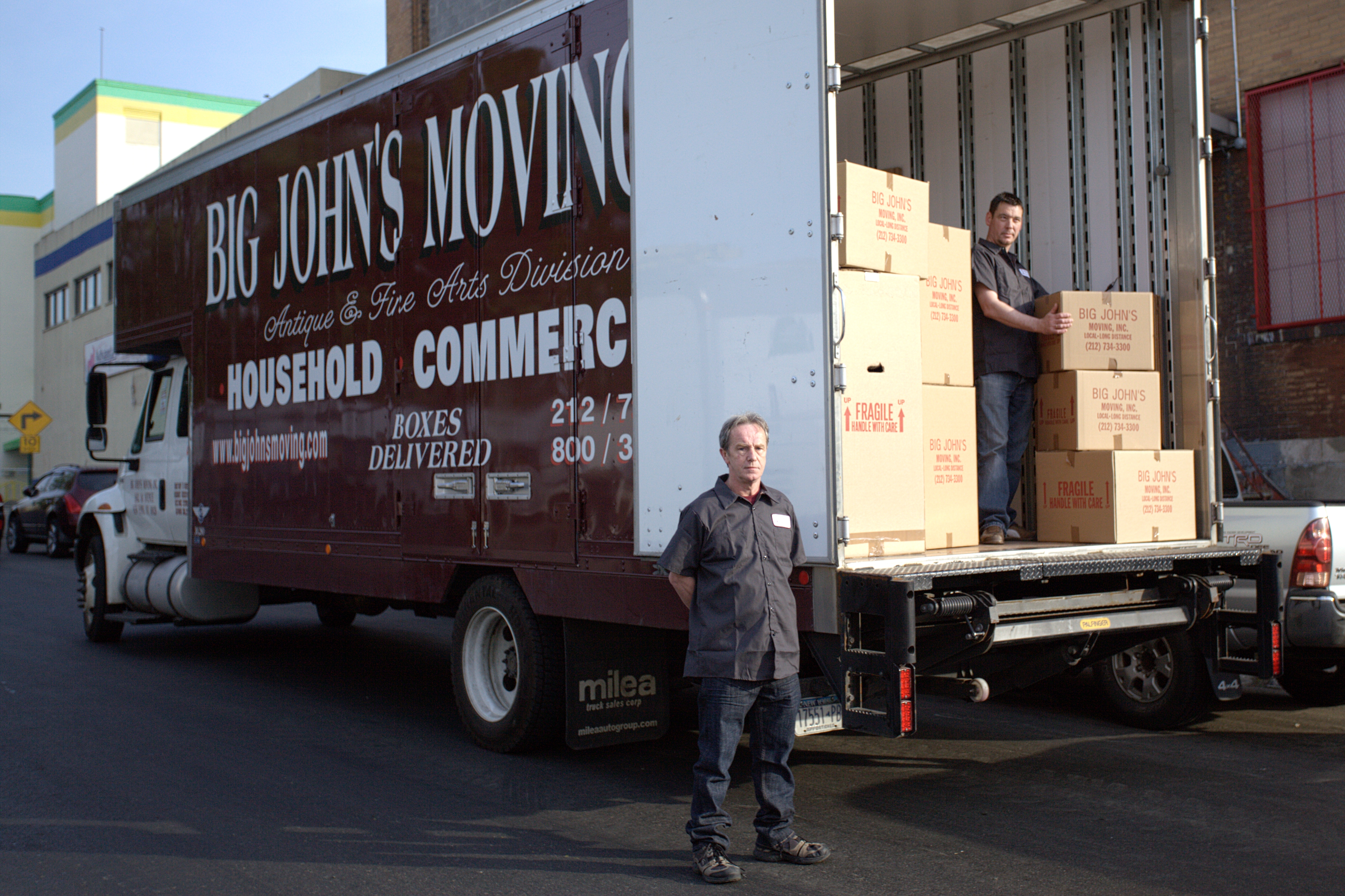
In other cases, a single crew will handle your long-distance move from start to finish. This is one area where Big John’s differs from many national van lines, which often use separate crews for loading and unloading.
When the same team is responsible for both loading and unloading, you can tip at the end of the move. Not only does this simplify the process, but it also guarantees that the tip goes directly to the movers who handled your belongings throughout the entire trip.
Before moving day, it is always a good idea to confirm how many crews will be handling your move so you can plan tipping accordingly.
Beyond Cash: Food, Drinks, and Respect
Tipping is important, but how you treat your movers throughout the day also matters. Simple gestures can support the moving crew and contribute to a better experience for all involved.
Providing Drinks
We strongly recommend having sports drinks and water available for your movers, especially if your move is happening during the summer.
Moving is physically demanding, and dehydration can slow movers down or lead to injury. Offering drinks is a simple way to support your moving team and keep things moving in the right direction.
Offering Food
Providing lunch, such as pizza or sandwiches, is a thoughtful gesture that your movers will deeply appreciate. Food doesn’t replace a cash tip, but it can help keep the moving team energized during a long day. If you do choose to offer food, keep it simple and ask the crew about timing.
Bathroom Access
Movers should always have access to a clean bathroom with soap and towels. This is a basic courtesy that helps them stay comfortable as they work, and planning for it ahead of time keeps things from feeling awkward.
How to Hand Over the Tip
How you give a tip matters just as much as the tip amount. Keep the following in mind as you’re passing out moving tips:
Individual Movers vs. the Foreman
Whenever possible, hand the cash directly to each mover. This helps keep tips evenly distributed and gives you a chance to thank each member of the moving crew. It also prevents confusion about how the tip is divided.
If you prefer to give the tip to the foreman, always do it in front of the entire crew and clearly state that the tip is meant for everyone.
Cash Is Preferred
When it comes to tipping movers, cash is preferred. It allows movers immediate access to the money for meals or transportation after the job. Some moving companies may also offer credit card tipping options, but cash is still the most reliable and desirable choice. Preparing cash ahead of moving day helps reduce stress and limit last-minute scrambling.
When It’s Okay to Tip Less (or More)
Tipping should always reflect the quality of service you received. Here’s when you should consider lowering or increasing your tip amount.
Performance-Based Tipping
If your movers were careful, professional, and respectful, tip at or above the standard range.
On the other hand, if you notice issues with handling, poor communication, or unprofessional behavior, feel free to reduce the tip. Tipping is for good service.
Budget Considerations
We realize that moving can be expensive; not everyone has flexibility in their budget. If you can’t tip as much as you would like, that’s okay. A smaller tip paired with a sincere “thank you” and a positive review still means a lot. Honest feedback helps moving companies recognize their strongest team members and maintain moving service quality. It can also help bring in future customers for the moving company.
Final Thoughts
So, there you have it – appropriate tips for movers. Knowing what to expect around tipping allows you to focus on the move itself instead of making last-minute decisions. When tipping is handled thoughtfully, it becomes a simple part of wrapping up the day rather than another source of stress.

Recent Comments